
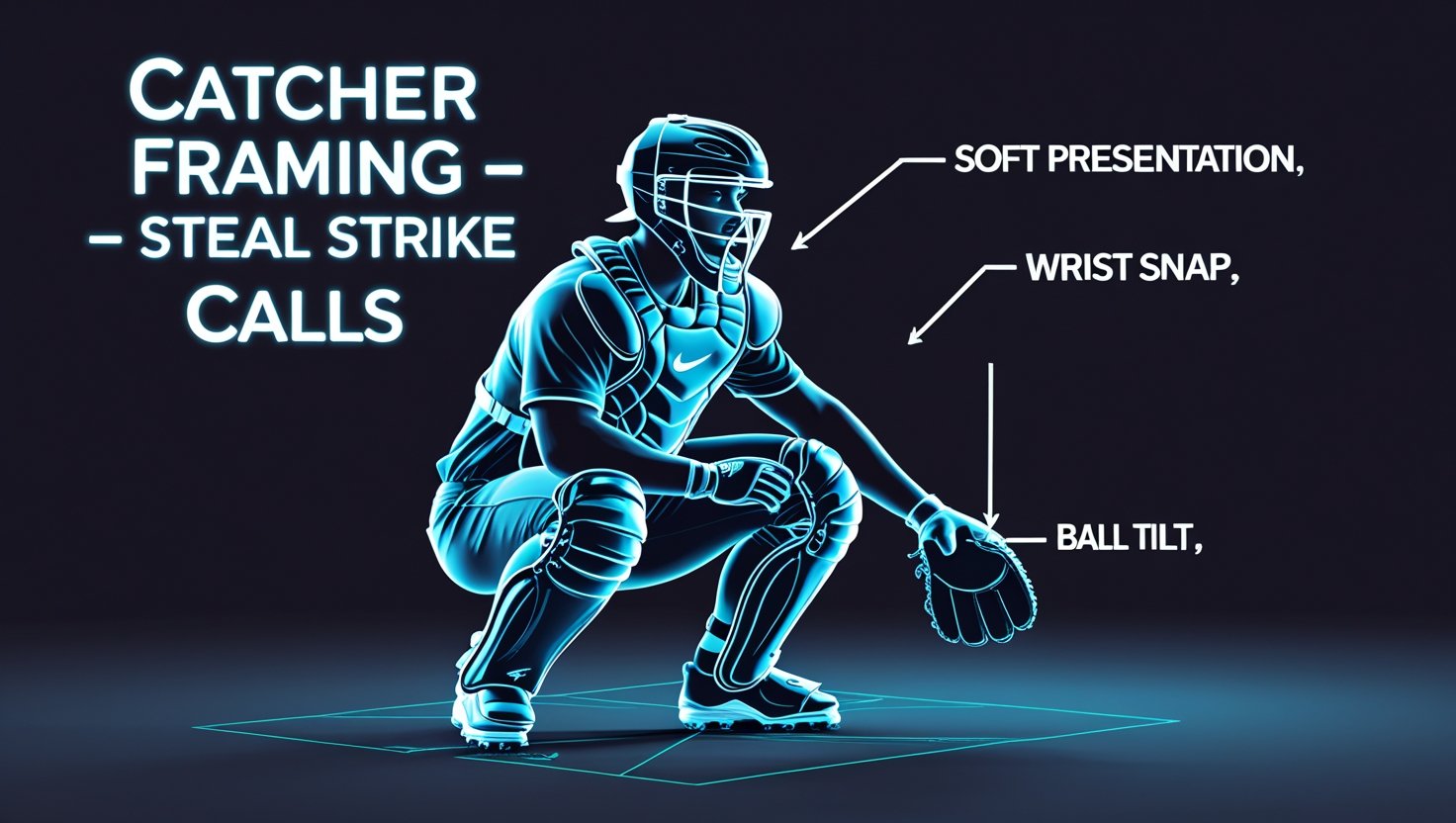

Catcher Framing | Steal Strike Calls
Imagine a split-second gesture that transforms a borderline pitch into a critical strike call, this is the magic of Catcher Framing. In baseball, where every pitch and every call can shift the momentum of a game, this subtle skill has become a game-changer for teams seeking to edge out the competition.
The Art Behind Catcher Framing:
At the heart of baseball strategy lies an art form that rarely makes headlines but dramatically influences outcomes: Catcher Framing. This technique involves a catcher’s almost imperceptible movements while receiving a pitch. By subtly adjusting the glove’s angle or positioning, catchers create the illusion that a pitch, which is teetering on the edge of the strike zone, is more securely within its boundaries. This skill doesn’t rely solely on physical dexterity but also on an acute awareness of timing, body mechanics, and the umpire’s line of sight.
Even a fraction of a second misstep can mean the difference between a strike and a ball. In professional leagues like the MLB, where a single strike call can alter an inning’s momentum, the value of effective framing is immeasurable. Coaches invest heavily in developing this trait because it not only saves pitches but also subtly impacts opposing hitters’ strategies.
Striking from the Shadows:
The concept of Steal Strike Calls is built on the premise that not every borderline pitch is judged solely on its trajectory. A catcher who masters framing can tilt the umpire’s perception in their team’s favor. Think of it as a blend of athletic finesse and psychology. When a catcher catches a pitch with a slight forward movement of the glove, it can make the difference between the pitch being a ball or a strike. Over a season, these extra calls can accumulate, dramatically boosting a team’s effectiveness on the mound.
This isn’t about trickery, it’s an evolution of technique honed over countless hours of practice. Advanced video analysis and MLB analytics have provided fresh insights into how effective catchers are at this craft, spotlighting those who can convert even the most ambiguous pitches. With contenders battling not only on physical talent but also on the mastery of such subtle techniques, Catcher Framing has cemented itself as a cornerstone of modern baseball strategy.
Techniques to Steal Strike Calls:
The mechanics of framing are as nuanced as they are critical. A catcher’s technique involves more than simply catching the ball, it’s about doing so in a manner that enhances the perception of the pitch’s location. A key component is the positioning of the glove. When a catcher slightly shifts the glove closer to the strike zone after receiving the pitch, it tricks the human eye into viewing an already borderline pitch as squarely on target. This refined movement, executed in an instant, requires rigorous practice and acute body control.
Additionally, slight adjustments in the catcher’s posture, a subtle forward lean, or even a minimal wrist twist can create the visual illusion necessary to tip the scales in favor of a strike call. Such methods have been refined over decades and are integrated into the training regimens of many professional catchers. The ultimate goal is to create consistency, repeatedly giving umpires the impression that the ball was where it needed to be, thereby accumulating favorable calls that can shift an entire game’s outlook.
The Broader Impact on MLB Strategy:
The influence of Catcher Framing extends beyond the confines of the catcher’s box. A successful framing technique not only helps in garnering extra strike calls but also shapes the overall baseball strategy. For pitchers, having a catcher who can effectively frame pitches augments their confidence and allows them to operate with a slightly looser control over the strike zone. This symbiosis between pitcher and catcher can force batters into a defensive posture, anticipating calls that perpetually favor the home team. Moreover, the ripple effects are observed in game statistics, a catcher’s ability to frame well is often correlated with reduced walk rates and lower opponent OPS (on-base plus slugging).
In high‐pressure scenarios, where every pitch is scrutinized and every count matters, teams that prioritize framing are typically a step ahead. By extracting maximum value from each pitch, these teams tilt close games in their favor, using science, psychology, and raw technique to overcome competitors.
Quantifying the Magic of Framing:
In today’s data-driven sports landscape, even the most subtle skills are measured meticulously. The impact of Catcher Framing is now quantified through advanced metrics such as strike rate conversion percentages and “runs saved” statistics. Technologies like Statcast track every movement behind the plate, offering insights into how catchers affect umpire calls. These datasets provide a detailed look at how often a catcher’s framing turns a pitch in the so-called “shadow zone”, the boundary area where a call is most likely disputed, into a strike.
By turning these percentages into quantifiable advantages (often expressed as “runs saved”), teams can evaluate and compare a catcher’s contribution in concrete terms. The numbers not only inform coaching decisions but also affect player evaluations and contracts. As teams continue to embrace analytics, the nuanced contributions of framing become more appreciated, showcasing how a seemingly minor adjustment can yield significant long-term benefits in competitive MLB play.
Developing a Fine-Tuned Skill Set:
Mastery of Catcher Framing is not an innate talent alone, it’s a skill that is honed through repetitive practice, specialized training, and constant refinement. Modern baseball academies are now incorporating advanced simulation tools and video analysis to help catchers perfect their technique. In controlled settings, catchers work on the precise mechanics of glove positioning, timing, and body alignment. Coaches emphasize the importance of subtle movements, teaching players how a slight shift in the glove’s angle can be the difference between a strike and a ball.
This training regime, merged with feedback from data analytics, ensures that catchers not only learn the correct mechanics but also understand the context in which framing is most effective. By simulating game situations and varying pitch locations, players develop an intuition for framing that goes beyond rote technique. The result is a new generation of catchers who can consistently steal strike calls with precision and confidence, a testament to the evolving interplay between athletic training and performance analytics.
How Framing Influences the Game Flow:
Behind every great performance in baseball lies an element of psychology, and Catcher Framing is no exception. Umpires, despite their expertise, are human, and their calls can be influenced by subtle visual cues. When a catcher frames a pitch effectively, it not only increases the likelihood of a positive call but also introduces a psychological element into the game. Batters begin to sense that even marginal pitches might be judged unfavorably, which can influence their timing and approach at the plate.
In effect, good framing forces hitters to adapt, often leading to more cautious swings or altered strategies when they face a pitcher paired with a savvy catcher. This psychological pressure, while hard to quantify, plays a critical role in high-stakes situations where every decision counts. The symbiotic relationship between a pitcher and a catcher with top-tier framing skills can create a formidable duo that consistently puts opponents under stress, shifting game dynamics in their favor.
The Future of Framing in Baseball:
As baseball continues to evolve in the digital age, so too does the art of Catcher Framing. Emerging technologies, such as virtual reality training and real-time feedback systems, are beginning to reshape how catchers refine their skills. Future training modules may integrate augmented reality overlays that help players visualize the strike zone boundaries more clearly, allowing them to experiment with different framing techniques in simulated game conditions. Additionally, as analytics become even more advanced, teams will likely see an increased emphasis on micro-adjustments and continuous performance tracking.
This evolution promises to not only enhance the effectiveness of framing but also deepen our understanding of its impact on game strategy and outcomes. For teams eager to stay at the forefront of MLB innovation, investing in technology that refines framing techniques will be crucial. The future of baseball is already being written in the subtle shifts behind the plate, where each calculated move can change the course of an inning or even an entire game.
Conclusion:
In today’s high-stakes baseball environment, Catcher Framing is more than a hidden skill, it’s a strategic weapon. By mastering the art of Steal Strike Calls through subtle yet impactful movements, catchers not only enhance their own performance but also provide their teams with invaluable advantages. As training and technology evolve, the future of framing continues to promise even greater precision and influence. Embrace this blend of technique and analytics to understand how every pitch, every frame, and every call can be a game‑changer.
FAQs:
Q1: What is catcher framing?
It’s a technique where a catcher subtly adjusts their glove to influence strike calls.
Q2: How does framing help steal strike calls?
It tricks umpires into calling borderline pitches as strikes.
Q3: Why is catcher framing important in MLB?
It helps boost a pitcher’s effectiveness and improves team performance.
Q4: How is framing measured?
Advanced analytics and statistics, like strike conversion rates, are used.
Q5: Can poor framing hurt a team’s chances?
Yes, missed opportunities to secure strikes can alter game momentum.
Q6: Is framing a teachable skill?
Absolutely—through dedicated training and technology, catchers can improve.