
Baseball Team Magic | Unbreakable Bonds

Baseball is a team sport, and the team plays an important part. When the team’s chemistry is perfect, they create the magic of insane plays on a baseball pitch, and because of that, it creates unbreakable bonds between the players. Imagine stepping into a ballpark on a crisp autumn evening where every high-five and shared smile between teammates reverberates like a secret code. In the vibrant world of baseball, the magic isn’t just in home runs or diving catches, it lies in the soul of a team that forges unbreakable bonds both on and off the field. This enduring connection, often dubbed as Baseball Team Magic, transforms a group of individuals into a united force capable of overcoming any challenge. From the dugout to the diamond, the essence of teamwork becomes the catalyst for unforgettable victories and lifelong memories.

The Hidden Elements of Baseball Team Magic:

At the heart of any championship squad is a meticulously nurtured culture, a blend of traditions, values, and attitudes that transcends individual talent. Baseball Team Magic is born when players share a common vision and respect, building a legacy that extends beyond statistics. It starts with a commitment to excellence and an understanding that greatness is not achieved alone.

Every practice session, team dinner, and late-night conversation in the clubhouse contributes to building trust and camaraderie. When teammates appreciate each other’s efforts, whether on the field with a diving catch or off the field with supportive gestures, they create an environment where every player feels valued. This deep-seated culture fosters resilience; it serves as the backbone during tough seasons and unexpected setbacks. In such an atmosphere, players are motivated to lift each other up, knowing that each success is a shared triumph. The careful cultivation of such a culture is essential for creating unbreakable bonds that weather both adversities and triumphs.

How Adversity Builds Unbreakable Bonds:

Every baseball season comes with its share of ups and downs. However, it is during the storms of defeat, injuries, or inexplicable slumps that the true mettle of a team is tested. Adversity acts as the crucible in which unbreakable bonds are forged. When times get tough, a good team rallies around its members, pushing through pain and setbacks together.

Consider how players come together after a bitter loss, sharing their frustrations, dissecting what went wrong, and promising to come back stronger. These moments of vulnerability initiate powerful conversations that lay the foundation for mutual understanding and trust. They lead to extra practice sessions, in-depth video reviews, and collective strategizing that transforms the pain of defeat into a unifying force. In this way, every setback becomes an opportunity to learn and bond, ensuring that the scars of hardship do not divide but instead cement the unity of the team.

Inside the Locker Room:

Beyond the roar of the crowd and the intensity of gameplay lies a quieter realm where magic is constantly in the making, the locker room. This is where players drop their public personas and reveal their true selves. Within these walls, Baseball Team Magic is nurtured through shared rituals, inside jokes, and moments of genuine connection.

Locker room rituals vary from team to team. Some clubs begin their day with a unified chant or a simple moment of silence, while others might have quirky traditions like a “lucky handshake” or a celebratory meal after a big win. These customs may appear small, but they are the threads that weave together the fabric of unbreakable bonds. When teammates laugh together, confide in one another, and embrace collective goals, they build a foundation of genuine friendship that boosts confidence and lifts team spirit.

The power of the locker room lies in its candid atmosphere. Here, aspirations are shared and doubts are soothed. Coaches and veteran players often act as mentors, guiding younger members through the complexities of both the sport and life. This nurturing space transforms individual struggles into collective victories and reinforces the idea that the team’s strength is the sum of its parts. Every shared smile, every hearty laugh, and every word of encouragement is a building block in the legacy of team unity.

Legendary Stories from Baseball History:

History is rich with tales of baseball teams whose unity went beyond mere tactical coordination, blossoming into something almost magical. When we talk about Baseball Team Magic, we recall legendary squads whose unbreakable bonds propelled them to iconic status. These stories inspire not only current players but also fans who see in these teams the epitome of loyalty and passion.

Take, for instance, the legendary clubhouse of the 1970s, where iconic players laughed, argued, and celebrated together, forming friendships that lasted far beyond their playing careers. Such teams transcended statistics, their chemistry was palpable on the field. In another instance, modern teams have showcased how deep-rooted trust and shared struggles can galvanize a group to achieve remarkable feats. Anecdotes from various eras remind us that the true essence of victory often lies not in record-breaking numbers alone, but in the unity and spirit with which a team approaches every challenge.

These narratives of on-field brilliance and off-field brotherhood illustrate that while talent may win games, it is the shared belief in a collective purpose that creates a legacy. From the enduring bonds witnessed in the dugout during crucial playoff runs to the long-lasting friendships formed long after the final game, the stories of these teams serve as timeless testaments to the power of unity and the magic that arises when players become a family.

Psychological Research on Team Chemistry:

The spark behind Baseball Team Magic isn’t merely a romantic notion, it’s also backed by solid psychological research. Studies in sports psychology have long shown that high levels of cohesion and trust can directly enhance team performance. When players feel connected, they communicate with greater clarity, support one another more effectively, and exhibit heightened levels of motivation and resilience.

Research into group dynamics reveals that teams with strong interpersonal bonds tend to weather stress better and make more effective decisions under pressure. This phenomenon, often described as a “group flow,” is where members act in synchrony and anticipation of each other’s moves, a key ingredient in flawless execution on the field. The interplay of trust and shared goals creates a psychological safety net, encouraging players to take calculated risks and push their limits without fear of isolation. This invisible thread of connection significantly boosts both individual performance and collective outcomes.

Moreover, when teammates empathize with one another, they are more inclined to share insights and constructive criticism, driving continuous improvement. The psychological reinforcement that comes from knowing you have the unwavering support of your peers is a powerful motivator, turning ordinary performances into extraordinary displays of athletic chemistry. Thus, the study of team cohesion underscores the fact that unbreakable bonds are not only an emotional asset but a competitive advantage on the diamond.

Leadership and the Collective Vision:

No discussion of Baseball Team Magic would be complete without highlighting the pivotal role of leadership in forging unbreakable bonds. Whether it’s the veteran captain guiding the innings with calm authority or the innovative coach molding raw talent into a cohesive force, effective leadership is the cornerstone of a team’s unity.

Great leaders in baseball understand that success is not just about strategic plays but about cultivating trust and ensuring that every team member feels indispensable. They set clear expectations and articulate a common vision that motivates everyone to strive for excellence. By recognizing and celebrating not just individual brilliance but also collective efforts, leaders create an atmosphere where every win feels shared and every loss is a lesson to grow from.

Beyond tactical guidance, these leaders also serve as emotional anchors. They manage the pressure of high-stakes games and ensure that even amid adversity, the team remains focused on its larger purpose. Their ability to forge personal connections with each player fosters respect and loyalty, inspiring teammates to go the extra mile for one another. This constant reinforcement of shared values and goals transforms a group of talented athletes into a unified family, ready to face any challenge together.

Conclusion:

The essence of Baseball Team Magic lies in the profound, unbreakable bonds that transform a gathering of individuals into a living, breathing unit. From the enduring traditions of the locker room to the psychological dynamics that fuel peak performance, every element of team unity is vital to creating a legacy in the sport. Whether forged in the heat of adversity, nurtured by shared rituals, or inspired by visionary leadership, these deep connections are the true engine behind unforgettable seasons and championship triumphs. In the grand narrative of baseball, where every pitch can alter destiny, it is the indomitable spirit of togetherness that truly elevates the game.

FAQs:

Q1: What is Baseball Team Magic?

The special unity that drives a team’s success.

Q2: How are unbreakable bonds formed?

Through shared struggles, trust, and victory.

Q3: Why is team chemistry important?

It boosts communication and on-field performance.

Q4: What role do locker room rituals play?

They build trust and reinforce team identity.

Q5: Can leadership influence team bonding?

Yes, effective leaders create and nurture unity.

Q6: Do unbreakable bonds improve results?

Absolutely, they often lead to championship wins.
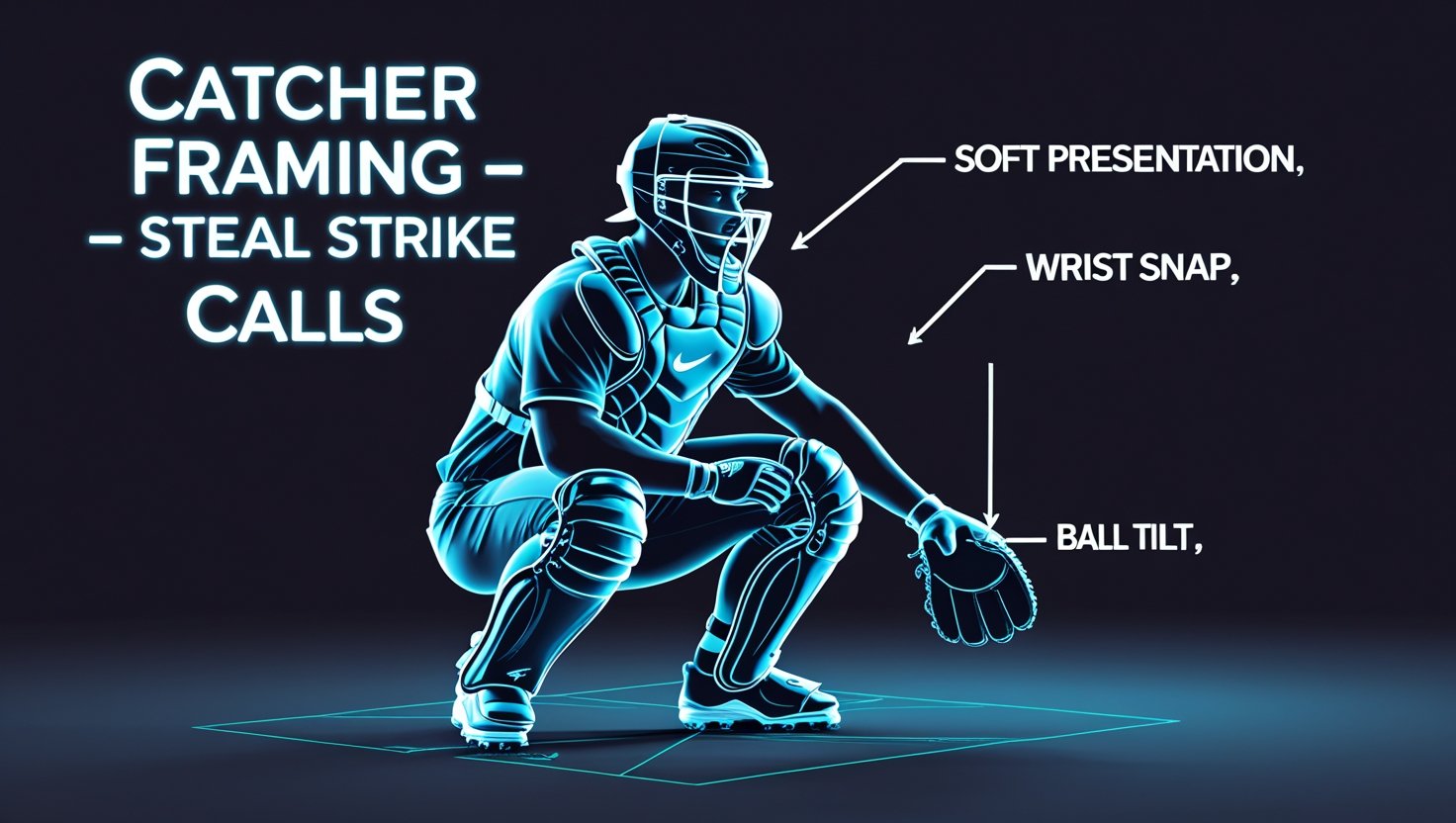
Catcher Framing | Steal Strike Calls

Imagine a split-second gesture that transforms a borderline pitch into a critical strike call, this is the magic of Catcher Framing. In baseball, where every pitch and every call can shift the momentum of a game, this subtle skill has become a game-changer for teams seeking to edge out the competition.

The Art Behind Catcher Framing:

At the heart of baseball strategy lies an art form that rarely makes headlines but dramatically influences outcomes: Catcher Framing. This technique involves a catcher’s almost imperceptible movements while receiving a pitch. By subtly adjusting the glove’s angle or positioning, catchers create the illusion that a pitch, which is teetering on the edge of the strike zone, is more securely within its boundaries. This skill doesn’t rely solely on physical dexterity but also on an acute awareness of timing, body mechanics, and the umpire’s line of sight.

Even a fraction of a second misstep can mean the difference between a strike and a ball. In professional leagues like the MLB, where a single strike call can alter an inning’s momentum, the value of effective framing is immeasurable. Coaches invest heavily in developing this trait because it not only saves pitches but also subtly impacts opposing hitters’ strategies.

Striking from the Shadows:

The concept of Steal Strike Calls is built on the premise that not every borderline pitch is judged solely on its trajectory. A catcher who masters framing can tilt the umpire’s perception in their team’s favor. Think of it as a blend of athletic finesse and psychology. When a catcher catches a pitch with a slight forward movement of the glove, it can make the difference between the pitch being a ball or a strike. Over a season, these extra calls can accumulate, dramatically boosting a team’s effectiveness on the mound.

This isn’t about trickery, it’s an evolution of technique honed over countless hours of practice. Advanced video analysis and MLB analytics have provided fresh insights into how effective catchers are at this craft, spotlighting those who can convert even the most ambiguous pitches. With contenders battling not only on physical talent but also on the mastery of such subtle techniques, Catcher Framing has cemented itself as a cornerstone of modern baseball strategy.

Techniques to Steal Strike Calls:

The mechanics of framing are as nuanced as they are critical. A catcher’s technique involves more than simply catching the ball, it’s about doing so in a manner that enhances the perception of the pitch’s location. A key component is the positioning of the glove. When a catcher slightly shifts the glove closer to the strike zone after receiving the pitch, it tricks the human eye into viewing an already borderline pitch as squarely on target. This refined movement, executed in an instant, requires rigorous practice and acute body control.

Additionally, slight adjustments in the catcher’s posture, a subtle forward lean, or even a minimal wrist twist can create the visual illusion necessary to tip the scales in favor of a strike call. Such methods have been refined over decades and are integrated into the training regimens of many professional catchers. The ultimate goal is to create consistency, repeatedly giving umpires the impression that the ball was where it needed to be, thereby accumulating favorable calls that can shift an entire game’s outlook.

The Broader Impact on MLB Strategy:

The influence of Catcher Framing extends beyond the confines of the catcher’s box. A successful framing technique not only helps in garnering extra strike calls but also shapes the overall baseball strategy. For pitchers, having a catcher who can effectively frame pitches augments their confidence and allows them to operate with a slightly looser control over the strike zone. This symbiosis between pitcher and catcher can force batters into a defensive posture, anticipating calls that perpetually favor the home team. Moreover, the ripple effects are observed in game statistics, a catcher’s ability to frame well is often correlated with reduced walk rates and lower opponent OPS (on-base plus slugging).

In high‐pressure scenarios, where every pitch is scrutinized and every count matters, teams that prioritize framing are typically a step ahead. By extracting maximum value from each pitch, these teams tilt close games in their favor, using science, psychology, and raw technique to overcome competitors.

Quantifying the Magic of Framing:

In today’s data-driven sports landscape, even the most subtle skills are measured meticulously. The impact of Catcher Framing is now quantified through advanced metrics such as strike rate conversion percentages and “runs saved” statistics. Technologies like Statcast track every movement behind the plate, offering insights into how catchers affect umpire calls. These datasets provide a detailed look at how often a catcher’s framing turns a pitch in the so-called “shadow zone”, the boundary area where a call is most likely disputed, into a strike.

By turning these percentages into quantifiable advantages (often expressed as “runs saved”), teams can evaluate and compare a catcher’s contribution in concrete terms. The numbers not only inform coaching decisions but also affect player evaluations and contracts. As teams continue to embrace analytics, the nuanced contributions of framing become more appreciated, showcasing how a seemingly minor adjustment can yield significant long-term benefits in competitive MLB play.

Developing a Fine-Tuned Skill Set:

Mastery of Catcher Framing is not an innate talent alone, it’s a skill that is honed through repetitive practice, specialized training, and constant refinement. Modern baseball academies are now incorporating advanced simulation tools and video analysis to help catchers perfect their technique. In controlled settings, catchers work on the precise mechanics of glove positioning, timing, and body alignment. Coaches emphasize the importance of subtle movements, teaching players how a slight shift in the glove’s angle can be the difference between a strike and a ball.

This training regime, merged with feedback from data analytics, ensures that catchers not only learn the correct mechanics but also understand the context in which framing is most effective. By simulating game situations and varying pitch locations, players develop an intuition for framing that goes beyond rote technique. The result is a new generation of catchers who can consistently steal strike calls with precision and confidence, a testament to the evolving interplay between athletic training and performance analytics.

How Framing Influences the Game Flow:

Behind every great performance in baseball lies an element of psychology, and Catcher Framing is no exception. Umpires, despite their expertise, are human, and their calls can be influenced by subtle visual cues. When a catcher frames a pitch effectively, it not only increases the likelihood of a positive call but also introduces a psychological element into the game. Batters begin to sense that even marginal pitches might be judged unfavorably, which can influence their timing and approach at the plate.

In effect, good framing forces hitters to adapt, often leading to more cautious swings or altered strategies when they face a pitcher paired with a savvy catcher. This psychological pressure, while hard to quantify, plays a critical role in high-stakes situations where every decision counts. The symbiotic relationship between a pitcher and a catcher with top-tier framing skills can create a formidable duo that consistently puts opponents under stress, shifting game dynamics in their favor.

The Future of Framing in Baseball:

As baseball continues to evolve in the digital age, so too does the art of Catcher Framing. Emerging technologies, such as virtual reality training and real-time feedback systems, are beginning to reshape how catchers refine their skills. Future training modules may integrate augmented reality overlays that help players visualize the strike zone boundaries more clearly, allowing them to experiment with different framing techniques in simulated game conditions. Additionally, as analytics become even more advanced, teams will likely see an increased emphasis on micro-adjustments and continuous performance tracking.

This evolution promises to not only enhance the effectiveness of framing but also deepen our understanding of its impact on game strategy and outcomes. For teams eager to stay at the forefront of MLB innovation, investing in technology that refines framing techniques will be crucial. The future of baseball is already being written in the subtle shifts behind the plate, where each calculated move can change the course of an inning or even an entire game.

Conclusion:

In today’s high-stakes baseball environment, Catcher Framing is more than a hidden skill, it’s a strategic weapon. By mastering the art of Steal Strike Calls through subtle yet impactful movements, catchers not only enhance their own performance but also provide their teams with invaluable advantages. As training and technology evolve, the future of framing continues to promise even greater precision and influence. Embrace this blend of technique and analytics to understand how every pitch, every frame, and every call can be a game‑changer.

FAQs:

Q1: What is catcher framing?

It’s a technique where a catcher subtly adjusts their glove to influence strike calls.

Q2: How does framing help steal strike calls?

It tricks umpires into calling borderline pitches as strikes.

Q3: Why is catcher framing important in MLB?

It helps boost a pitcher’s effectiveness and improves team performance.

Q4: How is framing measured?

Advanced analytics and statistics, like strike conversion rates, are used.

Q5: Can poor framing hurt a team’s chances?

Yes, missed opportunities to secure strikes can alter game momentum.

Q6: Is framing a teachable skill?

Absolutely—through dedicated training and technology, catchers can improve.